In the constantly evolving landscape of cloud computing, security remains a paramount concern, especially for platforms as extensively utilised as Microsoft Azure. This blog delves into the importance of implementing robust security measures, illustrated through a case study on structured automation and controlled provisioning in a secure-by-design environment.
In the rapidly evolving world of cloud computing, understanding the essentials of security, compliance, and identity management is crucial. This article delves into the core aspects of the Microsoft Security Compliance and Identity Fundamentals, providing insights into a range of critical topics from Zero Trust models to encryption, ensuring your data remains secure and compliant in the cloud.
In today’s interconnected world, Application Programming Interfaces (APIs) have become the backbone of modern software development. They enable seamless communication and interaction between different systems and applications. However, this convenience comes with inherent security risks. To mitigate these risks and ensure the integrity of the entire system, integrating API security into the DevSecOps framework is essential. In this blog post, we will explore the best practices for API security within the context of DevSecOps, focusing on British English conventions.
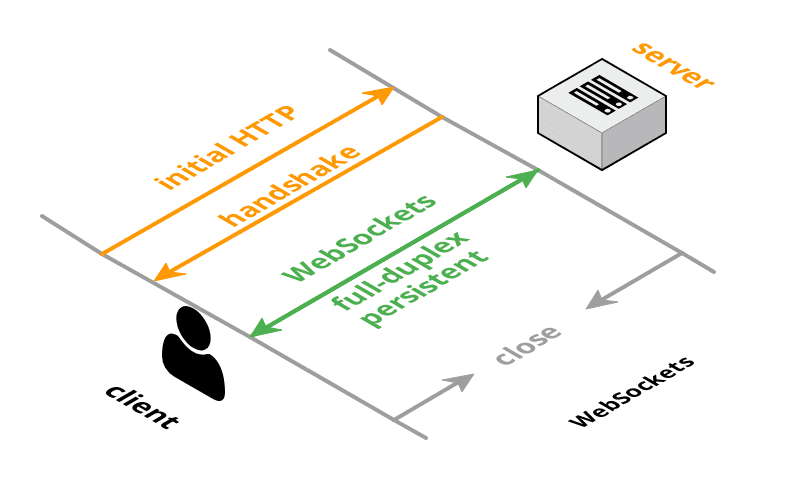
Places I have been working they have banded the use of WebSockets to pushing data to the end-user, or devices. I want to delve into the concept of WebSocket introduced in HTML 5, security issues around the WebSocket model, and the best practices that should be adopted to address security issues around WebSocket.
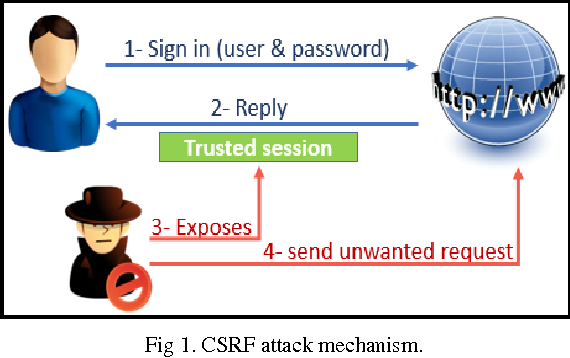
Description It is possible to trick a user into executing potentially dangerous actions against the target site due to a lack of Cross- Site-Request-Forgery (CSRF) protections. CSRF attacks are a class of confused deputy attacks that exploit the behaviour of browsers always sending authorization cookies in requests. The target site has no secure way of verifying the request was initiated from a link on a trusted domain.
Description The SSL Certificate Details provide information about the certificate associated with the HTTPS server. This information describes important attributes of the certificate and should be reviewed for the correctness of the contact information, whether it is self-signed, and how soon it will expire. The Supported Ciphers provides information about each available encryption scheme available for each of the possible SSL/TLS protocols.
Recommendations The expiration date for certificates should be monitored. New certificates should be available before the expiration date in order to maintain continuity of service and avoid downtime or displaying certificate expiration errors in users’ web browsers.

Description “Server Side Request Forgery” (a.k.a. SSRF) is a class of web-application vulnerability in which an attacker can cause a website to access unintended server-side resources, including the unauthorized reading, writing, or execution of server resources.
Web-applications designed to pass URLs (references to server accessible content) or portions thereof, from the client browser to the application server using HTTP request parameters or HTTP request headers, are at risk for Server Side Request Forgery exploitation unless they protect against it.
Server-side Request Forgery (SSRF) is related to another type of vulnerability called Open Redirects in the sense that they both rely on untrusted input to reference other web-resources.
Strategies for avoiding and/or fixing Server-Side Request Forgery include:
Design around it: Unless there is a reason why URL information must be passed, avoid the problem entirely by implementing an alternative design. Validation: When a URL value is received by the application, it must be white-list validated against the domain of possible legitimate values and rejected if it is not a member. Indirect References: In some cases, it may be possible to pass a (cryptographically strong) random value that represents the target URL and maintain a token: URL mapping on the server. Since URLs are never passed and the tokens are (practically) un-guessable, the vulnerability is eliminated. If URI is hard-coded, then the attacker cannot influence where the request is going, so it would look to be a false positive. However, although some scanning software is known for false positives, you need to be careful, as most scanning software are correct in their analysis. You need to check the whole source-to-sink trace that scanning software provides? If it is reporting only that one line as the source and sink, then yes it is a false positive.
Useful links:
https://www.owasp.org/index.php/Server_Side_Request_Forgery
Description A function call contains an HTTP response splitting flaw. Writing untrusted input into an HTTP header allows an attacker to manipulate the HTTP response rendered by the browser, leading to cache poisoning and cross-site scripting attacks.
Recommendations Remove unexpected carriage returns and line feeds from untrusted data used to construct an HTTP response. Always validate untrusted input to ensure that it conforms to the expected format, using centralized data validation routines when possible.
A simple string extension can resolve this issue:
public static string CRLFRemoval(this string token) {
return token.Replace("%0d", string.Empty, StringComparison.InvariantCultureIgnoreCase)
.Replace("%0D", string.Empty, StringComparison.InvariantCultureIgnoreCase)
.Replace("\r", string.Empty)
.Replace("\n", string.Empty)
.Replace("%0a", string.Empty, StringComparison.InvariantCultureIgnoreCase)
.Replace("%0A", string.Empty, StringComparison.InvariantCultureIgnoreCase);
}
Links for reference:
https://en.wikipedia.org/wiki/HTTP_response_splitting
https://securiteam.com/securityreviews/5WP0E2KFGK
https://www.owasp.org/index.php?title=Testing_for_HTTP_Splitting/Smuggling_(OTG-INPVAL-017)
The following is a symmetric encryption/decryption routine using AES in GCM mode. This code operates in the application layer and is meant to receive user-specific and confidential information and encrypt it, after which it is stored in a separate database server. It also is called upon to decrypt encrypted information from the database.
This is how, within your organisation, you can protect the data, especially in a cloud-first, multi-tenant world. The source will provide you with the concepts around encrypting enterprise data, look at what you should encrypt, and cover robust patterns and practices you can follow in your organisation.
To get a level of how many data breaches are happening Breach Level Index provides this information, along with many other statistics
http://breachlevelindex.com/
Need to check if you have an email account that has been compromised in a data breach when check out Have I Been Pwned to check if you have been compromised and also Signup to get email notifications
I did some quick research on the SQL Server Firewall “Allow Access to Azure Services” option in Azure today.
And I sorry to say that my fears were right, that by setting this option does pose a significant security risk and leaves the SQL Server vulnerable.
When comparing two MACs or hashes (also password hashes) for equality you would first think a simple comparison would be okay? Think again as they are susceptible to timing attacks.
In cryptography, a timing attack is a side channel attack in which the attacker attempts to compromise a cryptosystem by analysing the time taken to execute cryptographic algorithms.
I’ve come across a class in the System.Security namespace that is often overlooked. The class is SecureString. In this post, I will go over what SecureString is and why it is needed.
Have you ever come across these scenarios before?
Using Azure can open up a can of worm around security and many customers have many concerns
Microsoft do a lot of things to keep your Team Service project safe and secure, refer to this link for details: Visual Studio Team Services Data Protection Overview.
It is important that when using Azure that you take security very seriously, I’ve been looking around to see if I can get together as much information as I can to help businesses protect the environments that they relay on so much to run their businesses.
Problem I have created a view that posts to an action via Ajax with the expectation that the action will return the requested data or an empty string. Even better, I would like it to be configurable to return whatever value I see fit.
Cross Site Attacks (XSS) what is that all about? “Cross-site scripting (XSS) is a type of computer security vulnerability typically found in Web applications. XSS enables attackers to inject client-side script into Web pages viewed by other users. A cross-site scripting vulnerability may be used by attackers to bypass access controls such as the same origin policy. Cross-site scripting carried out on websites accounted for roughly 84% of all security vulnerabilities documented by Symantec as of 2007. Their effect may range from a petty nuisance to a significant security risk, depending on the sensitivity of the data handled by the vulnerable site and the nature of any security mitigation implemented by the site’s owner.” All user’s inputs can be a back door for attacker to attack your site. User’s inputs that we will categorize as un-trusted inputs are : Incoming URLs including Request.QueryString[] values Form post data (Request.Form[] values including values from hidden fields and disabled fields) Cookies Data in HTTP Headers (such as Request.UserAgent and Request.UrlReferrer). Your site could be attacked by altering the query string, form values, or cookies data. The solution is not to prevent request manipulation but to check that each request is a legal request for the logged-in visitor. Cross-Site Scripting and HTML Injection If an attacker can get our site to return some javascript to our visitors, then the attacker’s script can take control of our visitors’ browsing session and by this the attackers can collect the personal information (passwords, credit card details) of our visitors. There are two main ways an attacker follow to get this: Persistently: by entering formed malicious input into some feature and hoping we will store it into our database and then issue it back to other visitors. Non-persistently or Passively : by finding a way of sending malicious data in a request to our application and having our application echo that data back in it is response. The attacker then finds a way to trick a victim into making such a request. Razor HTML Encoding The Razor view engine helps protect us against XSS attacks by encoding any data that we refer to using the @ tag to make it safe to display as HTML. This means when we request an URL with a javascript code as a query string, Razor processes the query string value and replaces the special characters and rendering javascript code as a simple text. Razor view engine treats the contents of MvcHtmlString objects as if they were encoded, even when that is not the case. We can use Html.Raw helper method to include our HTML into the web page without it being encoded.