In my original Polly article, I introduced Polly as a robust resilience framework for handling transient faults and service failures. At the time, Polly was entirely community-driven and required manual configuration within each application. Fast forward five years, and Microsoft has officially embraced the concepts introduced by Polly, incorporating them directly into the .NET framework with a suite of first-party resilience libraries.
What is a Resilience Framework? Polly is classed as a resilience framework. A resilience framework is a set of libraries that help an application to recover from transient or more extended failures in services or infrastructure upon which it depends. When recovery is not possible, the resilience framework will facilitate graceful degradation of your application.
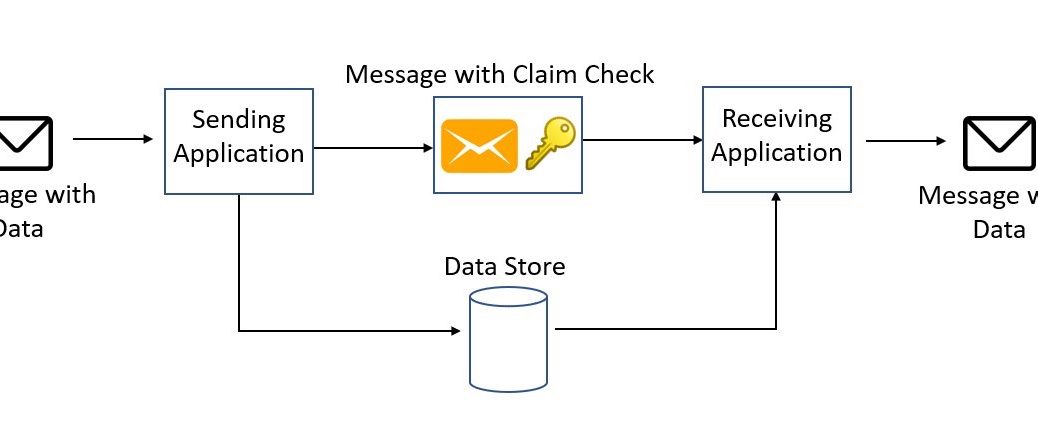
I’ve been using an Event Bus for some time now in the designs of a system, for reason of performance and scalability. There is also an issue with the message size. But it would be best if you were using the Event Bus as a messaging system, not a data transport mechanism.
What Is Multi-Tenancy? “Software Multitenancy refers to a software architecture in which a single instance of a software runs on a server and serves multiple tenants. A tenant is a group of users who share common access with specific privileges to the software instance. With a multitenant architecture, a software application is designed to provide every tenant a dedicated share of the instance including its data, configuration, user management, tenant individual functionality and non-functional properties. Multitenancy contrasts with multi-instance architectures, where separate software instances operate on behalf of different tenants” (Wikipedia)
The problem? How can application A, handle events sent by an application B, and how to implements those events in B? Knowing that B has no idea of the existence of A.
The MemoryMapped way The following example shows how it would work, with the restriction that both applications are using the same memory space. In real code, the producer() method would be in a different application from the consumer() method, but this serves to illustrate an implementation:
Sometimes, a solution is so beautiful, and you wish you had the right problem to apply it to. But unfortunately, issues come first. As impressive as your new screwdriver may be (imagine a handle made of gold, with your initials engraved, of course, if the problem at hand is to knock in a nail, it makes for only a less than perfect solution.
I’m sure you’ve used a third-party API at some point in your dev career – for example, to create new contacts in your CRM, to send emails through a newsletter service, or to do anything else with a third-party service virtually.