Title: Unlocking the Power of AI: Embracing the Potential for Positive Change
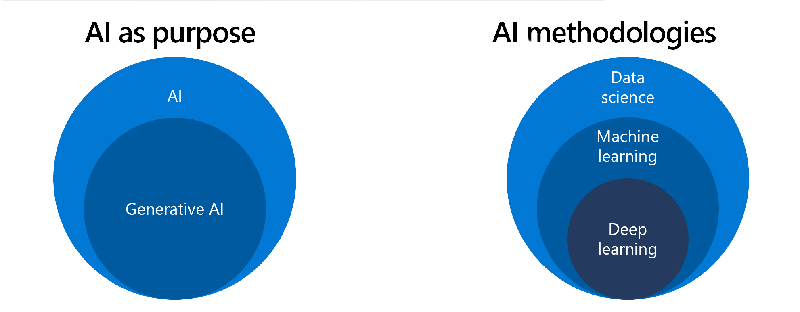
Introduction: Artificial Intelligence (AI) is a term often used in various contexts, encompassing machine learning, deep learning, data science, generative AI, and responsible AI. Yet, understanding these concepts and their distinctions is key to unleashing their uplifting potential in solving real-world challenges. In this uplifting blog post, we will shed light on the fundamental concepts of AI technology and explore how they can be harnessed to create positive transformations in businesses and beyond.
In today’s interconnected world, Application Programming Interfaces (APIs) have become the backbone of modern software development. They enable seamless communication and interaction between different systems and applications. However, this convenience comes with inherent security risks. To mitigate these risks and ensure the integrity of the entire system, integrating API security into the DevSecOps framework is essential. In this blog post, we will explore the best practices for API security within the context of DevSecOps, focusing on British English conventions.
Have you ever wanted to write a story but felt stuck or uninspired? Or maybe you have a great idea but don’t have the time or skills to turn it into a captivating narrative. If so, you might be interested in Tomb AI, a new online platform that uses artificial intelligence (AI) to help you create stories from scratch.
Synthetic data is like a virtual twin of real-world information, generated artificially instead of from actual events. It’s created using clever algorithms and serves two primary purposes: validating mathematical models and training machine learning models. You can think of data generated by computer simulations, such as music synthesisers or flight simulators, as synthetic data examples.
AI-generated images have become increasingly popular in recent years, as they offer a quick and easy way to create unique and eye-catching visuals. There are several websites that offer AI-generated images, each with its own set of features and capabilities.
Hey, here’s a roundup of all the ChatGPT versions we’ve got till now. Let’s keep this list fresh and handy, alright?
HuggingChat HuggingChat is an open-source AI assistant developed by Hugging Face that aims to provide users with a friendly, human-like personality and the ability to understand and respond to natural language queries1. It is essentially a user interface that allows people to interact with an open-source chat assistant dubbed Open Assistant1. With HuggingChat, you can enjoy an AI assistant that is accessible to everyone and can handle many of the tasks that ChatGPT can.
Chatbots have been around for a while and are widely used to automate customer service and support. However, with the advent of advanced language models like ChatGPT, the capabilities of chatbots have significantly expanded.
ChatGPT is a language model developed by OpenAI that’s based on the GPT-3 architecture. It’s a Generative Pre-trained Transformer that uses deep learning algorithms to generate human-like text. With massive data and advanced training techniques, ChatGPT can understand and respond to a wide range of topics with remarkable accuracy.
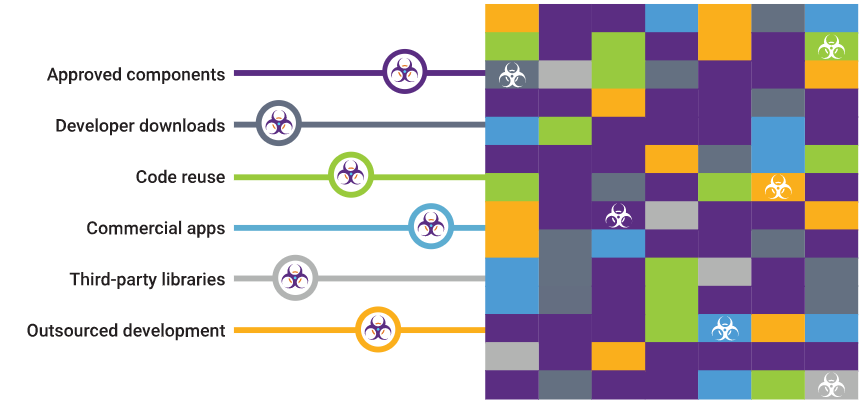
This post shows how each provider measures up and helps you select the correct Software Composition Analysis for your needs.
Fact: Software Composition Analysis (SCA) protects the software supply chain. In a report by Forrester[1] and Gartner[2], they explore how industry providers measure up, which will assist you in selecting the right one for your needs. It’s a valuable assessment of top suppliers in today’s market. Details below are an extract of this report with additional information which applies to our environment.
Here is a list of Security Policies and Guidelines from Microsoft
For V01: https://learn.microsoft.com/en-us/azure/storage/blobs/security-recommendations#:~:text=Require%20secure%20transfer%20(HTTPS)%20to%20the%20storage%20account
For V02: https://learn.microsoft.com/en-us/azure/app-service/security-recommendations#:~:text=Use%20static%20IP%20restrictions
For V03: No Microsoft recommendation applies here
For V04: https://learn.microsoft.com/en-us/security/benchmark/azure/baselines/service-bus-security-baseline#dp-3-encrypt-sensitive-data-in-transit
For V05: https://learn.microsoft.com/en-us/azure/network-watcher/network-watcher-nsg-flow-logging-overview#best-practices
For V06: https://learn.microsoft.com/en-us/azure/network-watcher/network-watcher-nsg-flow-logging-overview#best-practices
For V07: https://learn.microsoft.com/en-us/azure/storage/blobs/security-recommendations#networking:~:text=Enable%20firewall%20rules and https://learn.microsoft.com/en-us/azure/key-vault/general/best-practices#:~:text=Turn%20on%20firewall%20and%20virtual%20network%20service%20endpoints.
For V08: https://learn.microsoft.com/en-us/azure/storage/blobs/security-recommendations#:~:text=Turn%20on%20soft%20delete%20for%20blobs
Sensitive information can be protected from misuse through Encryption, Pseudonymization and Anonymization controls, converting plain text to an unusable format.
Only authorized users with the proper key/source should be able to see sensitive data (or in the case of Anonymization, not at all). Each of these methods work differently, as summarized below.
There are various types and nature of data we store in Azure storage. All kinds of blob data have different accessibility requirements. Sometimes data accessibility reduces over time, whereas accessibility remains the same for some blob data types. There is no point in paying the same price for data that is rarely being accessed or not accessed at all. Azure provides Access Tiers property to address such scenarios and optimize the cost on blobs with less accessibility.
Overview Businesses should believe that every team is in the business of creating great customer experiences.
To achieve that, the application must do more than just provide control, reporting and audibility. The business needs to tap into data signals from across its business and use them to drive ongoing improvements in the products, services, and experiences they intend to deliver to its customers.
With Microsoft now owning GitHub, the technical teams have been integrated, resulting in Azure DevOps and GitHub having the same leadership and personnel. The long-term strategic direction will be GitHub, but there is no plan for Azure DevOps to go into maintenance/sunset; therefore, choosing Azure DevOps is entirely OK in short to (undefined) medium term. Azure DevOps is currently in the early stages of development. When migration tools are needed, Microsoft will give them.
“The minimum viable product is that product which has just those features (and no more) that allows you to ship a product that resonates with early adoptors; some of whom will pay you money or give you feedback” – Eric Ries
There are a variety of techniques to deploy new updates for environments to production, so choosing the right strategy is an important decision, weighing the options in terms of the impact of change on the system and the end-users.
The following strategies need to be considered:
As part of our customer engagement, we have defined a naming convention for GitHub repositories. We have ideas around what conventions made sense, although the type of work influences these. As we tend to spend some of your engineering time working with different languages, conventions around naming formats make sense to the engineers. These, of course, might not make sense to individuals in other fields.
GISTS – engage in chat or gossip. “I need a good friend I can always gist with.” It is always good to chat with others, which is how we learn from each other. So why don’t project teams chat with each other? In this day and age of working from home, it is becoming more and more critical to form a social network, which helps not only with mental health but also work-related ideas and time.
The installation model for OCP 4.x is different than 3.x and there are no Azure Resource Manager templates available for deploying OCP 4.x in Azure https://docs.microsoft.com/en-us/azure/virtual-machines/linux/openshift-container-platform-4x
https://docs.openshift.com/aro/4/welcome/index.html
Azure Red Hat OpenShift 4 Documentation Important Azure Red Hat OpenShift is supported by Red Hat and Microsoft. As of February 2021, the documentation will be hosted by Microsoft and Red Hat as outlined below.